

In October, the state budget received 180 million euros more than in October last year, a total of nearly 1.4 billion euros. All major taxes, except for alcohol excise duty, have seen higher collections in the first ten months of this year compared to the same period last year.
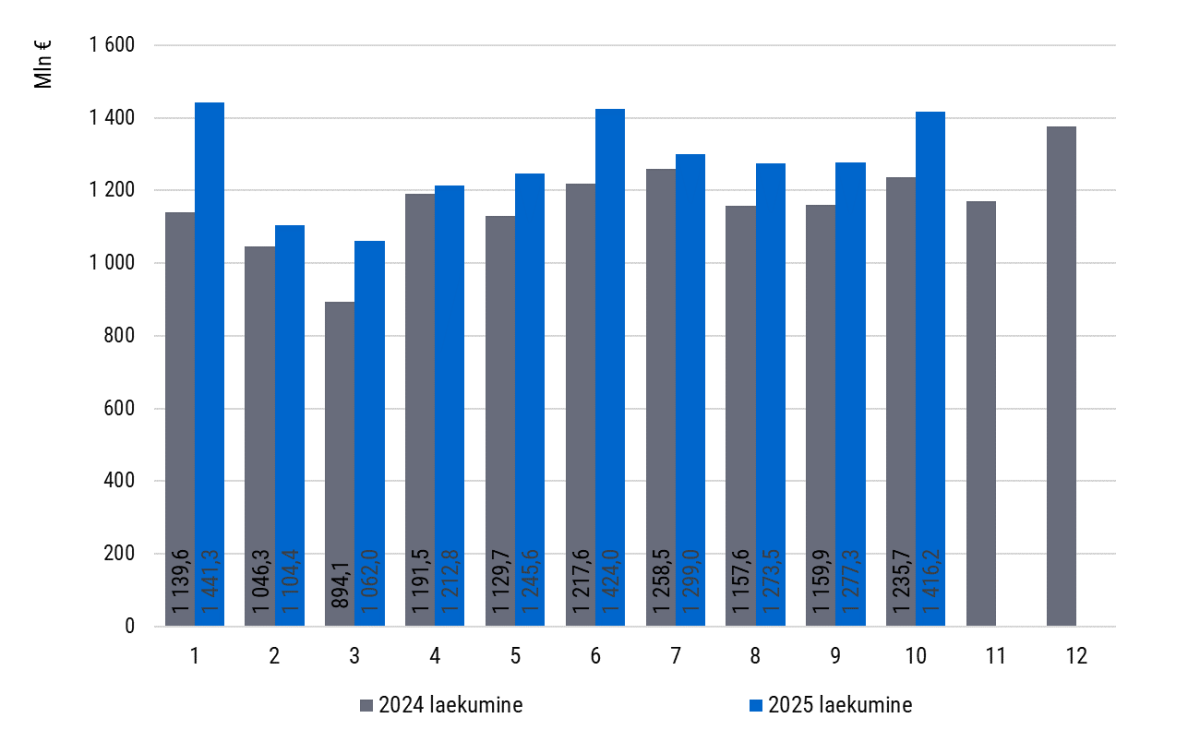
Graph: Monthly tax receipts in 2024 and 2025
The receipts of income tax of natural persons have increased the most in ten months, by a total of 429 million euros, including 69 million euros in October. Social tax receipts for the same period were 232 million euros higher than last year, with an increase of 26 million euros in October.
According to Raili Roosimaa, ETCB’s Deputy Director General, the increase in tax receipts continues to reflect, above all, the impact of the tax changes that entered into force this year and the increase in average wages. "Tax receipts have also been significantly affected by wage growth and a strong wage fund, which increased by 5.9% in October compared to a year ago,” Roosimaa said.
Tax revenue from corporate income tax increased by 177 million euros in ten months. This has been affected by the increase in the tax rate in January, due to which more dividends were paid than usual at the end of last year. Although the dividends were paid out in December last year, they were declared in January this year, which is why they are reflected in this year's receipts.
In ten months, VAT revenue has increased by 291 million euros compared to the same period last year. “The collection of VAT has been affected the most by the increase in the VAT rate in the summer. Increased fuel sales in September and October and e-commerce, the volume of which has been steadily increasing during the year, also contribute to the tax receipts," Roosimaa added.
In terms of excise duties, collections in the ten months of this year exceeded last year’s levels by 34 million euros for fuel and 1.7 million euros for tobacco. During the same period, alcohol excise duty revenue was the only category to decline, decreasing by 3.3 million euros, largely due to stockpiling at the end of last year ahead of the excise duty increase.
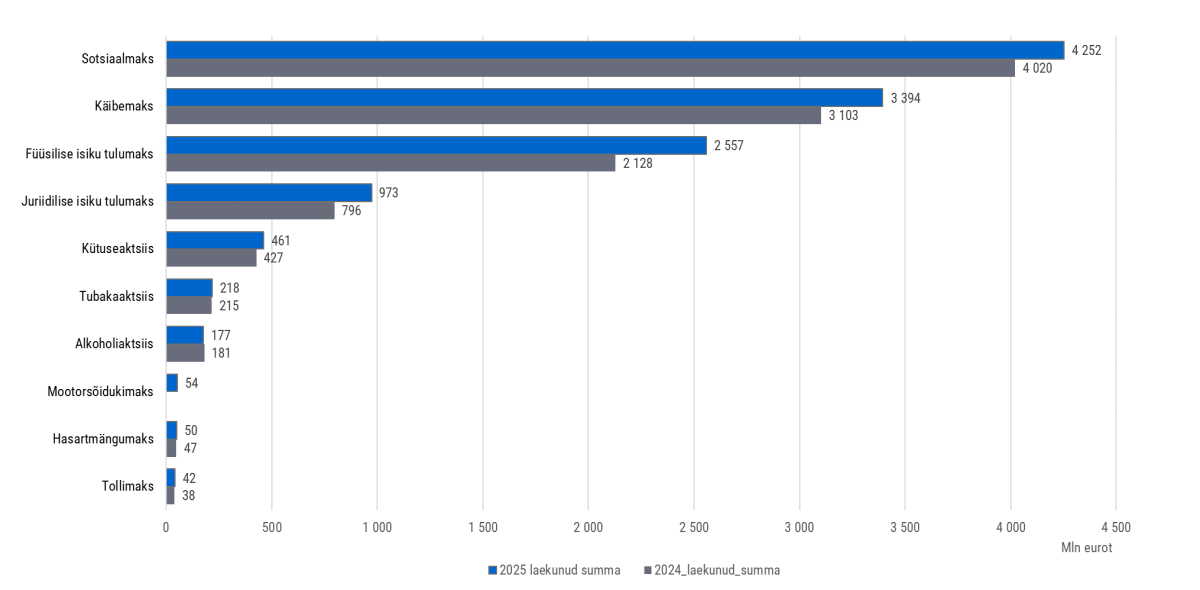
Graph: Tax receipts in the ten months of 2025 compared to the ten months of 2024
On November 1, tax arrears totalled over 359.5 million euros, with arrears being paid in instalments accounting for over 53.7 million euros. In October, tax arrears increased by 8.4 million euros, mainly due to unpaid income tax of natural persons and VAT.
Tax discipline has remained stable in Estonia in recent years and nearly 90% of taxable persons fulfil their tax obligations on time. Although the total amount of tax arrears has increased, tax receipts have increased even faster. As a result, the ratio of tax arrears to receipts has fallen to its lowest level in recent years. "It is also positive that around 15% of tax arrears are being paid instalments, which suggests that both businesses and private persons are actively looking for solutions to overcome temporary payment difficulties and avoid permanent insolvency," Roosimaa said.
October 1 was the deadline for the payment of both the second instalment of land tax and the income tax of natural persons subject to payment additionally, which has resulted in both unpaid and deferred tax liabilities contributing to the overall debt picture. “The amount of income tax of natural persons subject to payment additionally was 20 million euros higher this year than last year, due to a reduction in available deductions following legislative amendments. Nevertheless, natural persons’ income tax arrears are 2.2 million euros lower this year than last year," said Roosimaa.
The largest tax arrears as of November 1 were in the construction sector, wholesale and retail trade, repair of motor vehicles and motorcycles, manufacturing, as well as administrative and support service activities.
Compared to the beginning of November last year, tax discipline had fallen by less than one percentage point by November this year. “However, looking at the share of claims paid on time throughout 2025, we can say that tax discipline has remained stable throughout the year,” Roosimaa added.
More information on the rescheduling of tax arrears for private customers and companies can be found on the website of the ETCB. Instructions and FAQs can also be accessed by logging in to the e-MTA and selecting Help Center and “Payments of tax liabilities in instalments” from the menu.
Overview of tax receipts can be found on the website of the Tax and Customs Board.

